“The groupwork’s main aim is to provide upstream intervention in addressing family violence and child sexual abuse,” said Muhammad Suffian Bin Bahrin, a senior programme executive who was part of the team that developed and implemented the programme. “Children are taught to recognise and understand their feelings and bodily sensations, helping them identify what these signals may mean, such as feeling scared, anxious, or excited.”
“They also learn safe and appropriate ways to respond to these feelings and sensations, including practising regulation techniques and identifying trusted adults whom they can approach for support or confide in.”
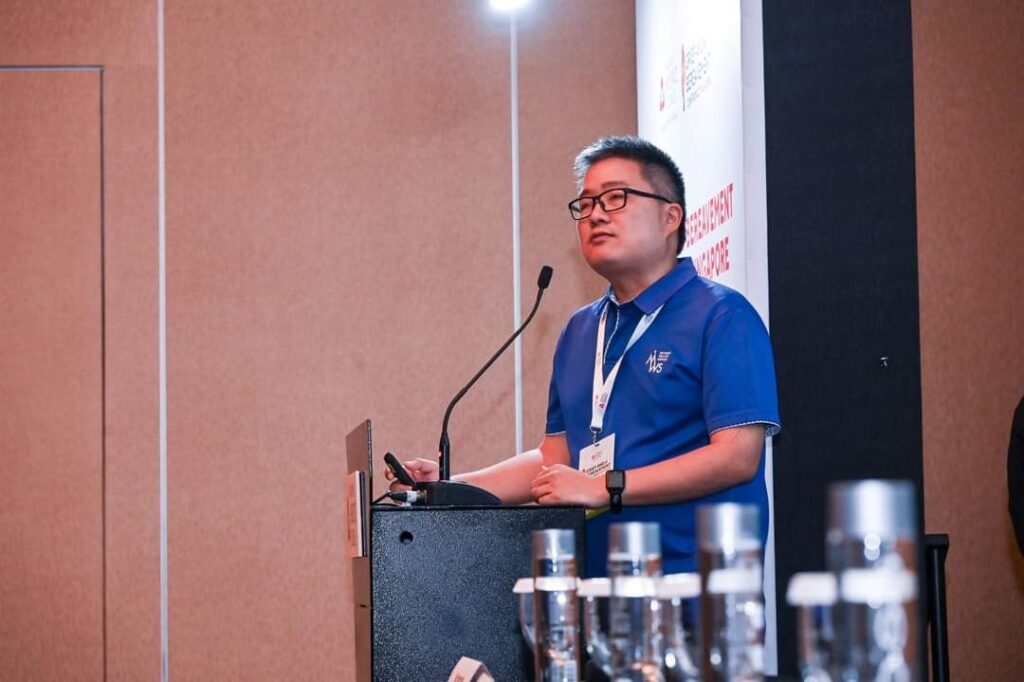
Yeo Chee Wei speaking at the Grief and Bereavement Conference Singapore 2024
Supervision is essential in palliative care to ensure practitioners provide effective, empathetic, and ethical support. It offers a structured space for reflecting on challenging cases, managing emotional responses, and maintaining professional boundaries. Through supervision, practitioners gain insights to navigate complex grief dynamics while addressing personal triggers that may arise during client interactions.
These insights and more were shared by Yeo Chee Wei, MWS Principal Medical Social Worker, at this year’s Grief and Bereavement Conference Singapore, held on 7-8 November 2024. He was speaking on the benefits of supervision in social work practice, patient advocacy and staff well-being.
“Very importantly, for a patient who is experiencing grief and helplessness, a well-supervised grieving process can help him make sense of the loss, regain hope and find his voice. In time, this may also transform the social worker’s perspective and narrative, and contribute to better support for the patient,” shared Chee Wei. “Supervision needs to be designed to support the social worker’s mental well-being.”