Nancy* and Karen* couldn’t be more different. Nancy is outgoing and expressive, while Karen is quiet and reserved. Their contrasting personalities often led to tension and the occasional argument.
Both women, in their 60s, reside at MWS Christalite Methodist Home – a Welfare Home for destitute persons, where female residents make up a small minority. The Home’s no gender-mixing policy, implemented for safety reasons, further limits social interaction.
As a result, many women face a heightened risk of social isolation – especially those like Nancy and Karen, who struggle to connect with others. Staff have observed that several female residents appear withdrawn and disengaged, often due to limited or absent family support, mental health issues, or behavioural challenges.
This mirrors broader national concerns. The Straits Times reported in August 2024 that two in five Singaporeans aged 62 and above experience loneliness – an issue linked to increased risks of cognitive decline, low self-esteem, and frailty.
To help reduce social isolation and uplift the mental well-being of female residents within the Home, the MWS Research, Innovation & Training Academy (RITA) team piloted a six-session groupwork programme, Colour Me Beautiful, from February to March 2025. Nine residents, including Nancy and Karen, participated.
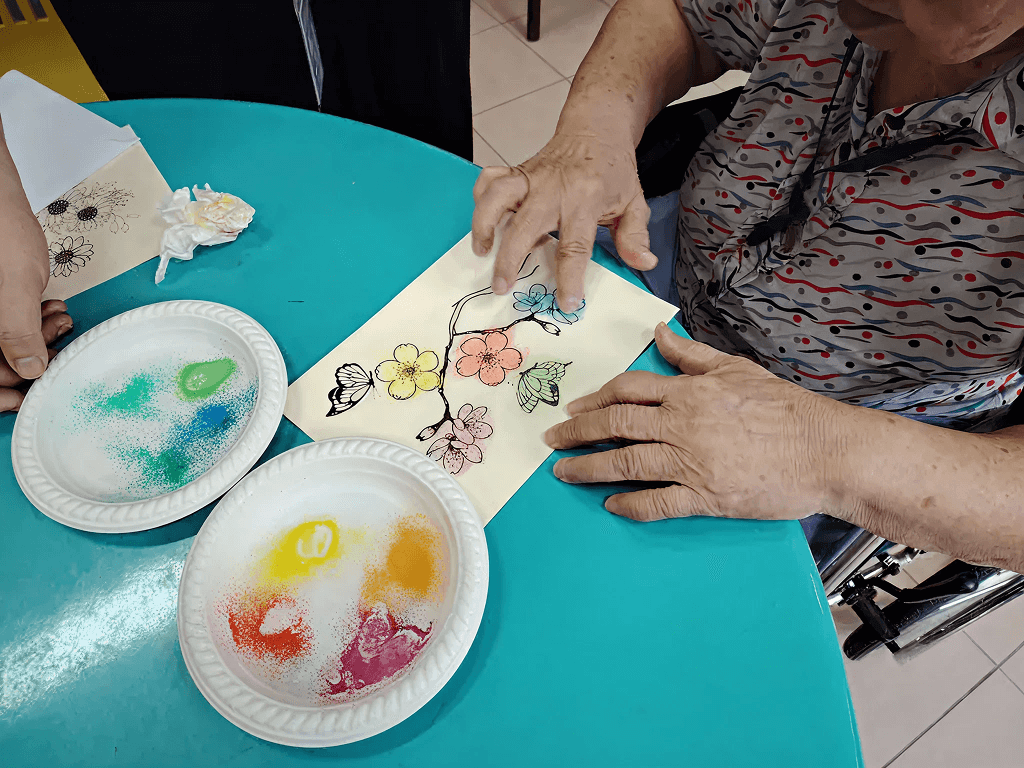
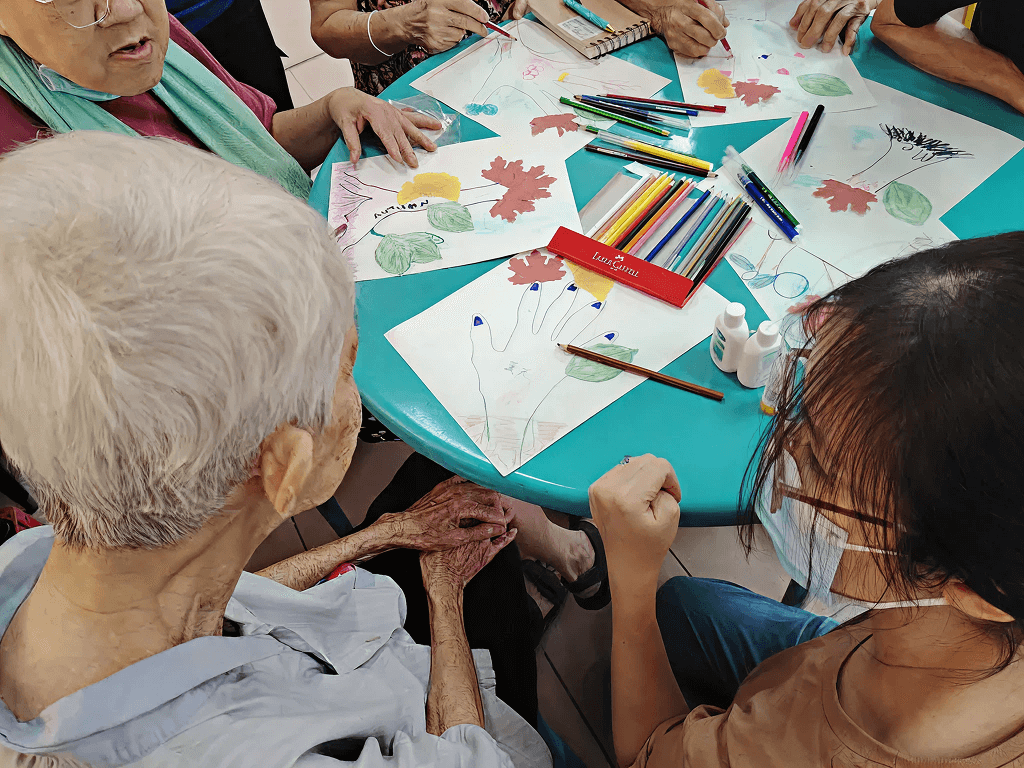
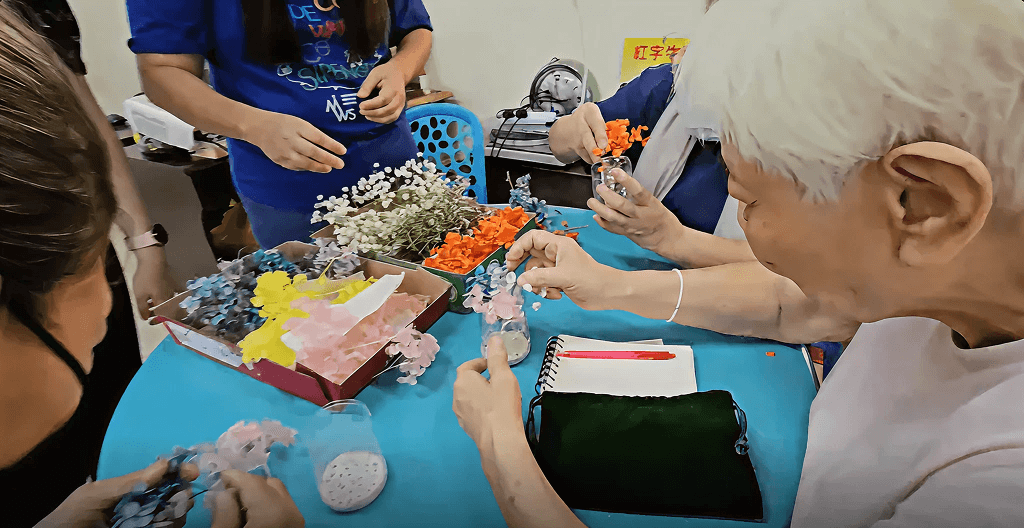
Each session began with hands-on activities – such as fashion styling, floral arrangement, or skincare application – to spark self-expression, before moving into guided groupwork focused on building resilience, personal growth, and a sense of community. In one session themed “Harmonious Colours”, residents created Nagomi Art and reflected on ways to foster a more peaceful environment.