Making Home Safe Again
1st June 2026

Making Home Safe Again
  • Family violence remains a growing and often hidden issue, with many cases surfacing only through deeper engagement at Family Service Centres.

  • Children can be deeply affected by domestic violence – even when they are not directly abused.

  • Supporting the survivor-parent is key to protecting the child, as healing and empowering the caregiver helps restore stability and safety in the family.

  • Holistic support – from help with emotional recovery, housing, finances, and parenting – makes a critical difference.

Aishah Abdullah’s ex-husband once shoved her with such force that she was flung across the room. “My head hit the floor with such impact that it left me with a concussion, and I kept vomiting afterwards,” said Aishah, now 42. 

Her three-year-old son, who witnessed the incident, burst into tears and ran out of the room. Her other two sons, aged five and two, rushed to help her up.

The silent, invisible wounds

“Hypervigilant” was how Aishah’s social worker, Ariel Ee, described her eldest son, Haziq*, during those turbulent years when their home was marked by conflict and instability. Whenever Ariel visited, he would linger nearby, quieting listening in on conversations. 

Haziq’s concern was not unfounded. He had witnessed the impact that prolonged abuse – including physical, sexual, and psychological harm from infidelity – had on his mother. When Aishah discovered that her husband was having a second affair, she was overcome with anguish and attempted to take her own life. 

“When my ex-husband had his first affair, he left me and our first son for a few months,” she said. “I took him back because I didn’t want my children to grow up in a broken family. When it happened again, I was devastated and felt so alone.”

A growing crisis behind closed doors

Aishah’s story reflects a troubling national trend. 

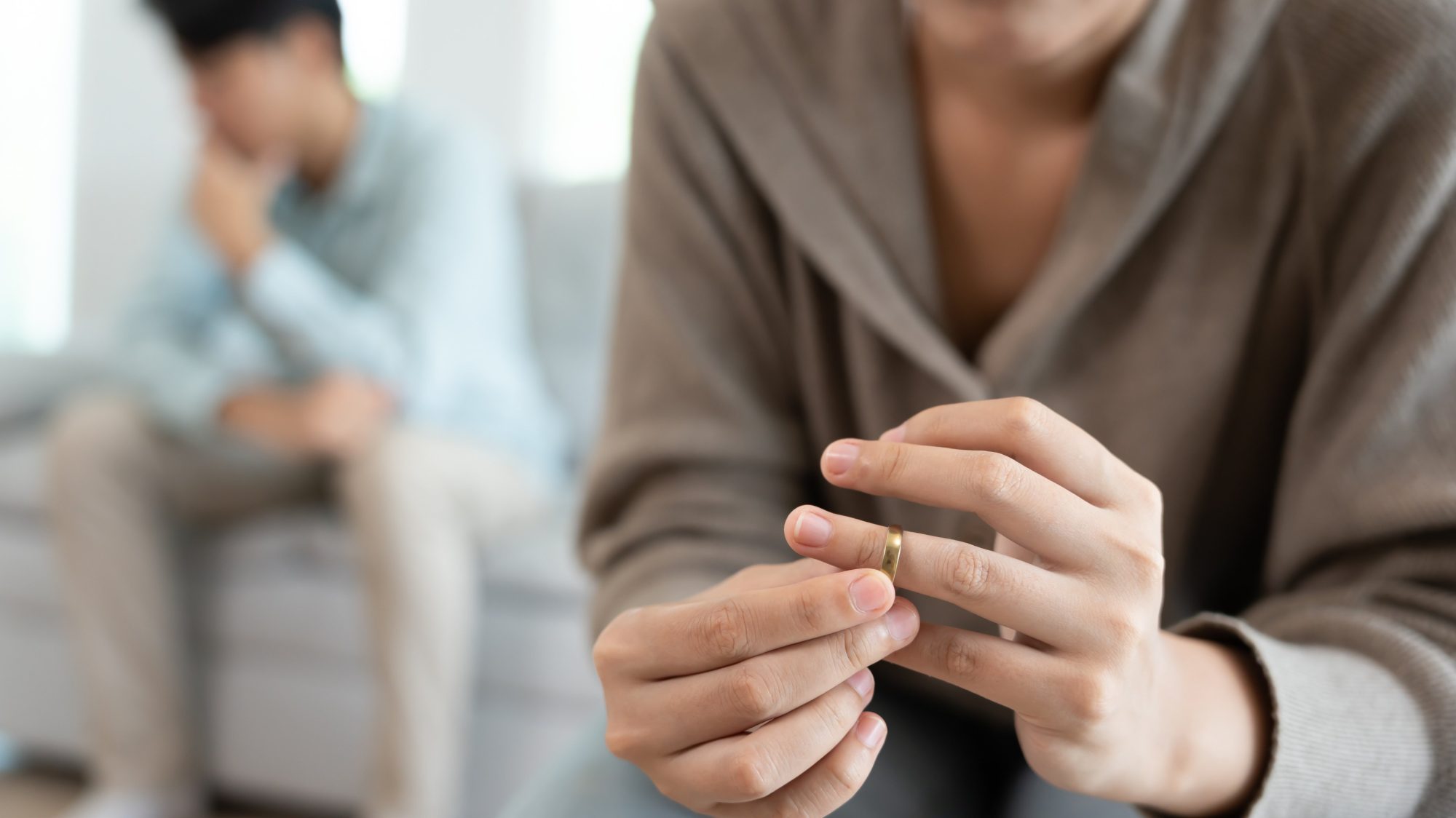
Reported spousal abuse cases in Singapore increased from 1,632 in 2021 to 2,136 in 2024. 

According to the Domestic Violence Trends Report 2025 by the Ministry of Social and Family Development, some clients approach Family Service Centres (FSCs) with issues such as financial strain or parenting challenges, only for abuse to be uncovered after deeper engagement. This points to the complex and often hidden nature of family violence.

Reported spousal abuse cases in Singapore grew by 31 per cent over three years. (Photo Credit: Canva)

Breaking the silence

After years of suffering in silence, Aishah sought help from MWS FSC – Tampines (TFSC). 

Ariel first helped Aishah establish safety for herself and her children, even as she worked towards divorcing her husband. When attempts to obtain a Personal Protection Order (PPO) were unsuccessful, they turned to practical measures such as changing the locks and planning on how to respond if her husband showed up.

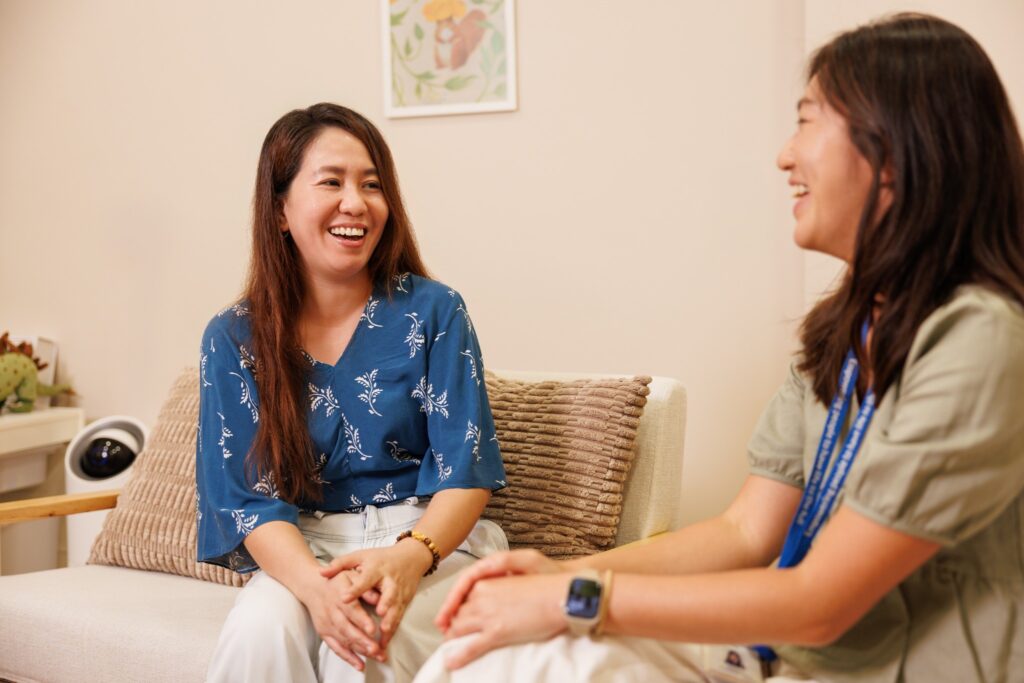
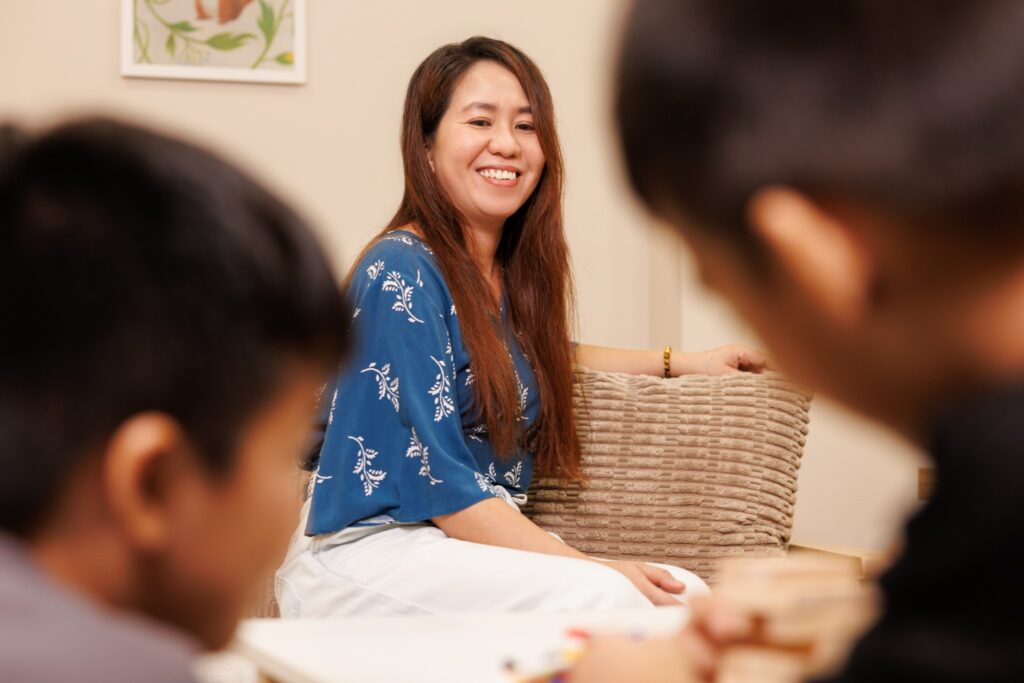
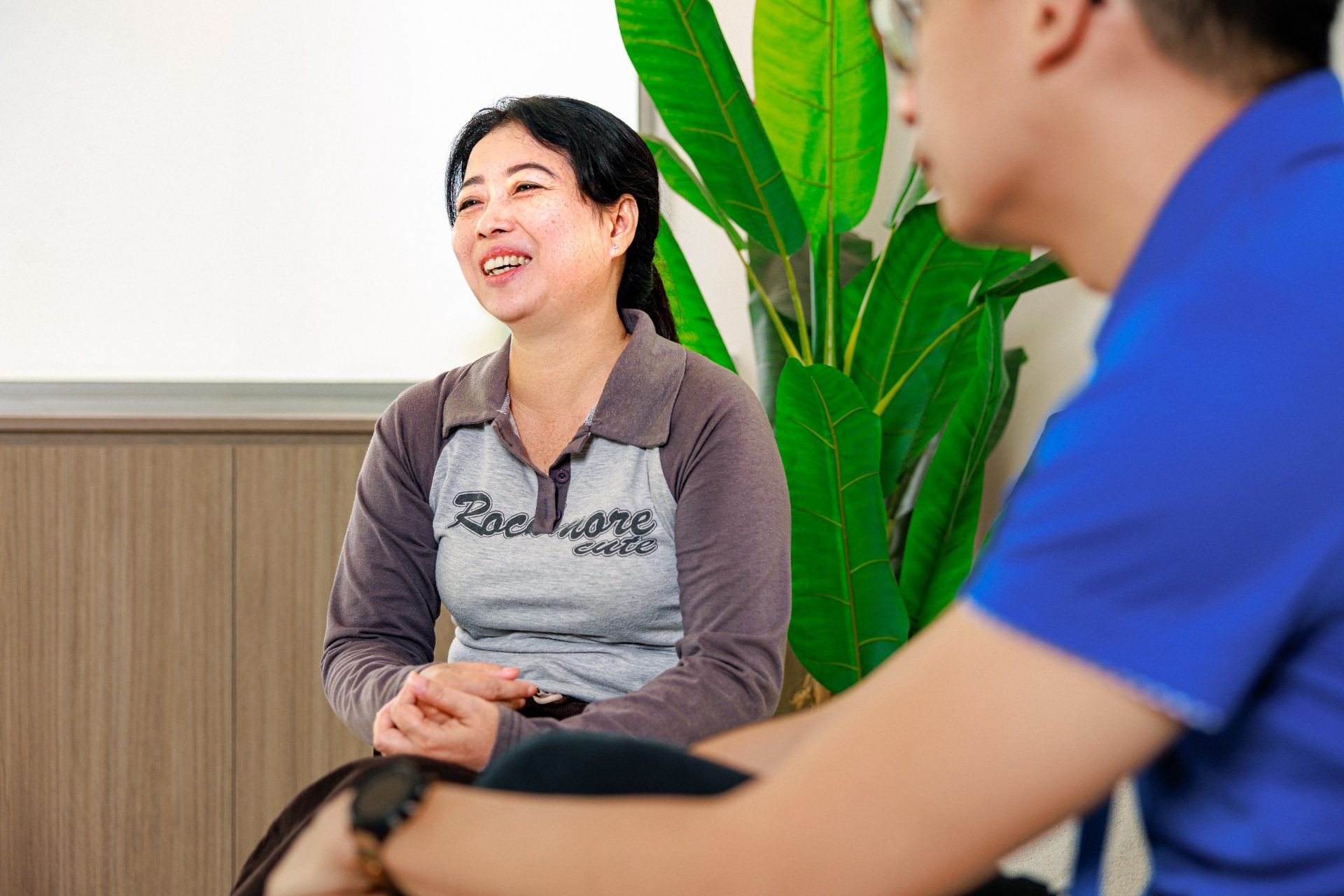
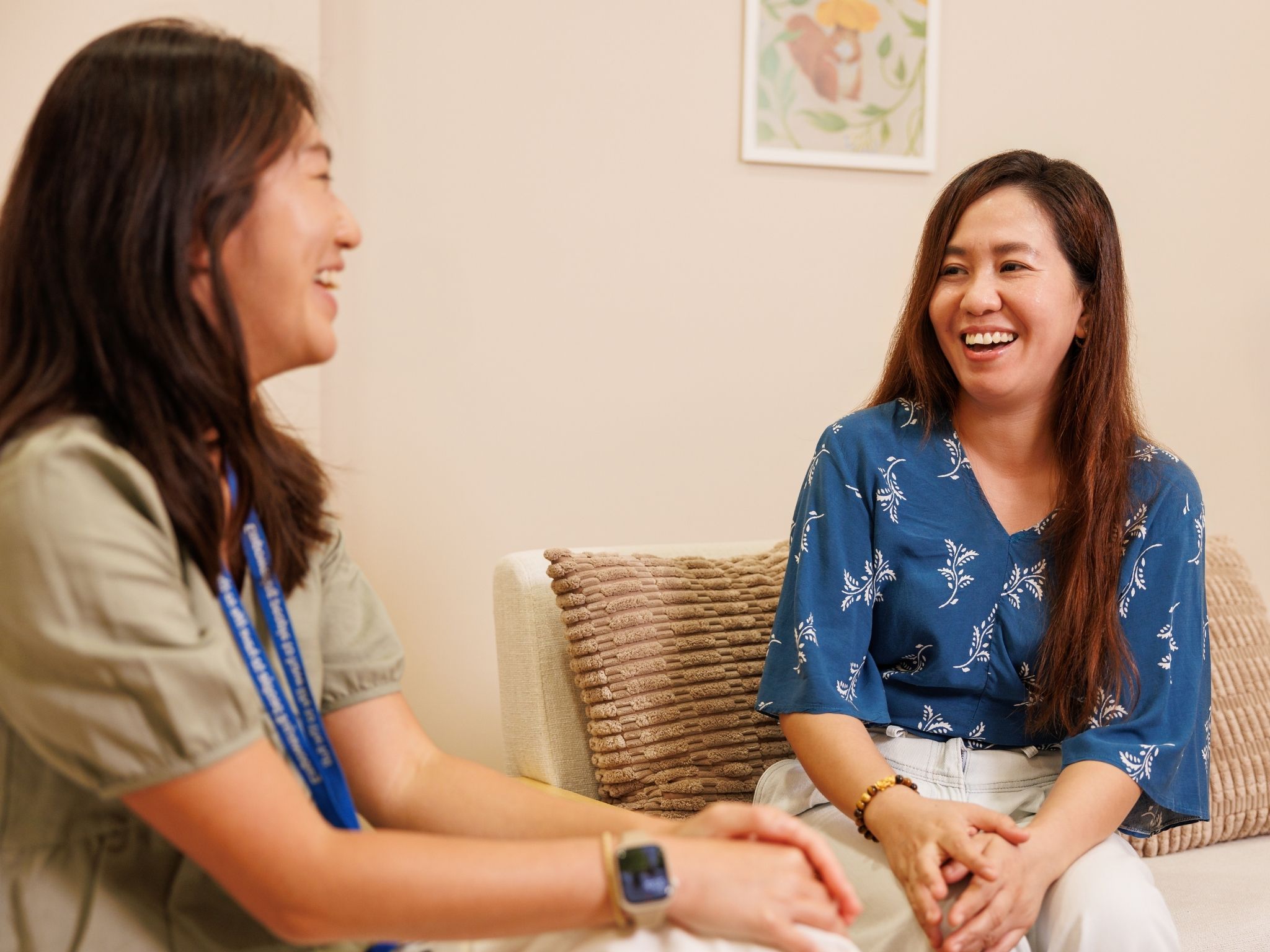
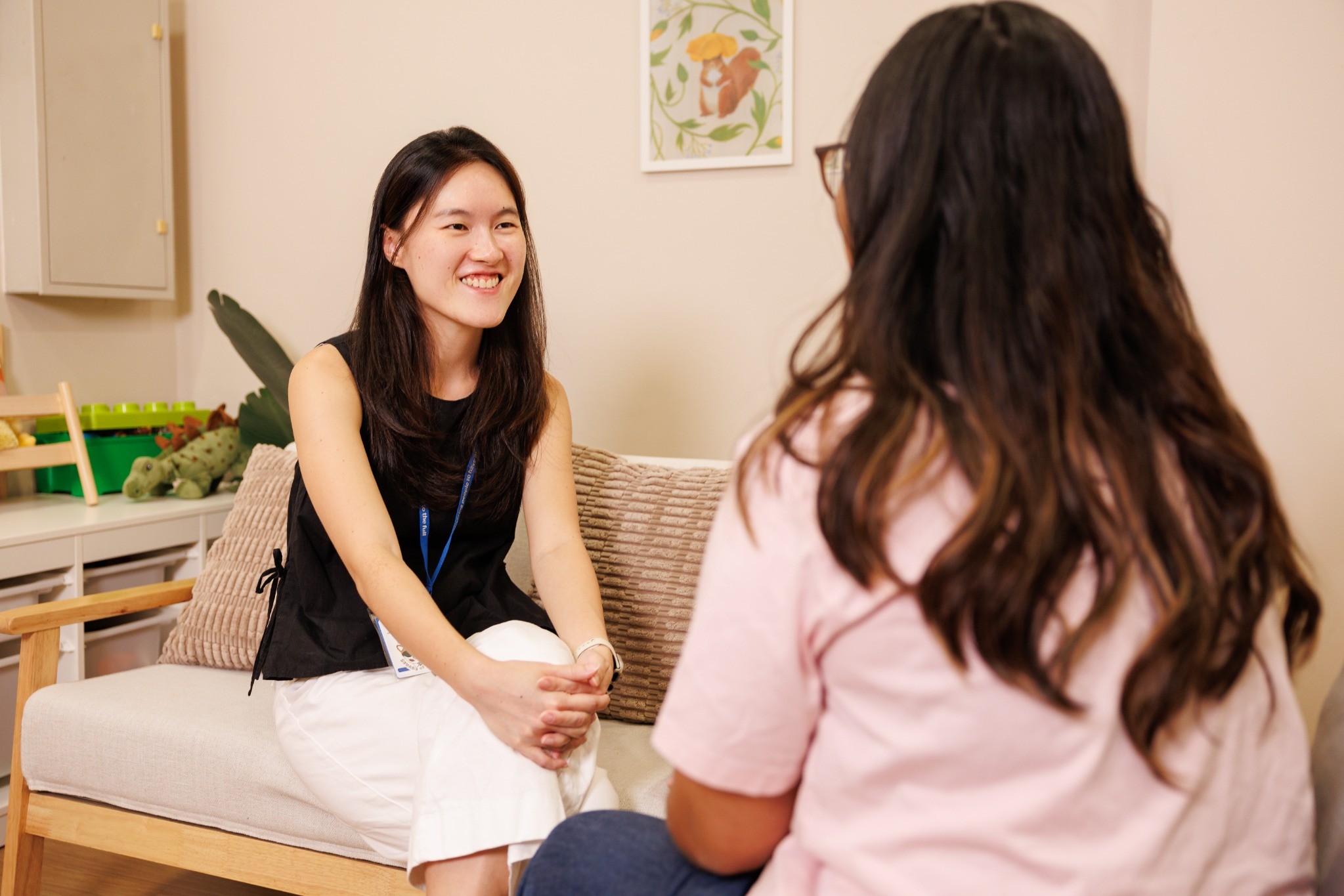
Aishah Abdullah, a domestic violence survivor, in a counselling session with her social worker Ariel Ee, at MWS Family Service Centre – Tampines.

The many pathways to harm

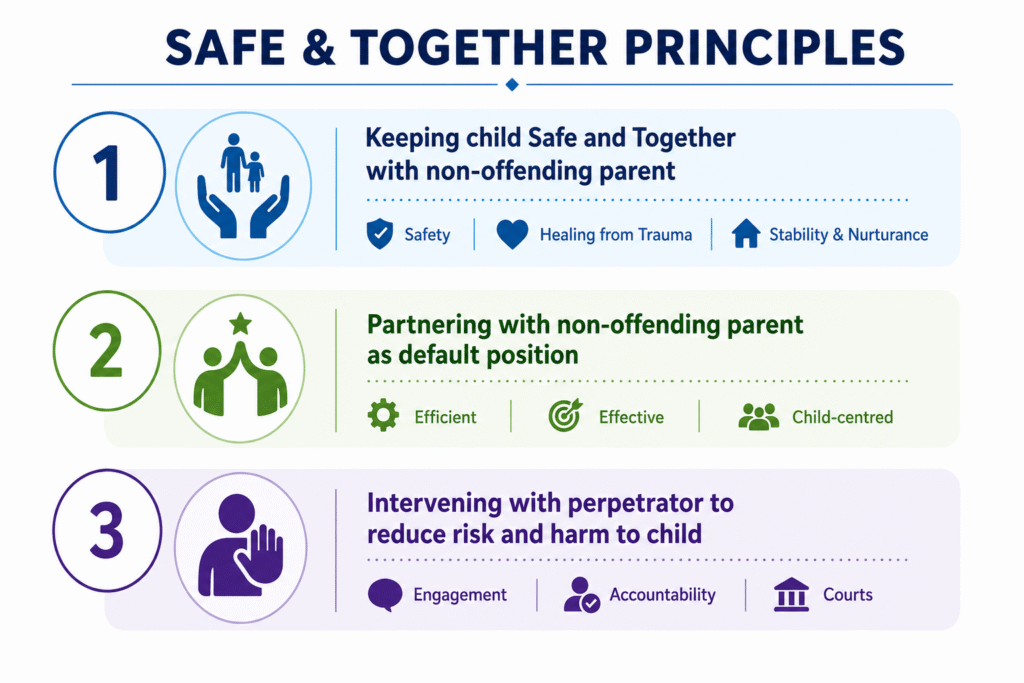
In supporting survivors like Aishah, Ariel draws on the strengths-based approach of the Safe & Together (S&T) Model (see diagram below), which recognises survivors’ capacity to protect and support their families, while holding perpetrators accountable.

Credit: Safe & Together Institute

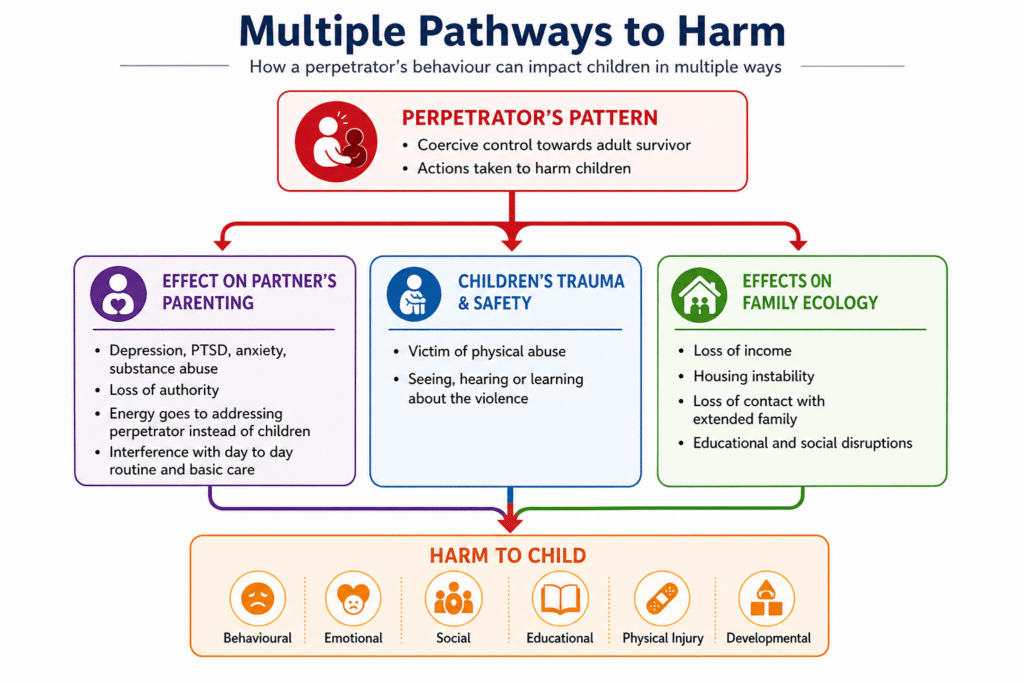
The model also reframes how harm is understood. “It’s not just about visible physical injury,” Ariel explained. “The perpetrator’s behaviour also affects the child’s development, sense of safety, and overall family functioning.”

Credit: Safe & Together Institute

In Aishah’s case, years of spousal violence took a heavy emotional toll on her – and her children lived with the spillover effects of that instability. 

“In moments of intense distress, Aishah would break down at home, and her children would sometimes step in to comfort her, even wiping her tears,” Ariel shared. This role reversal can strain a child’s development and sense of boundaries, as well as impact their emotional and psychological health.

Healing the parent, protecting the child

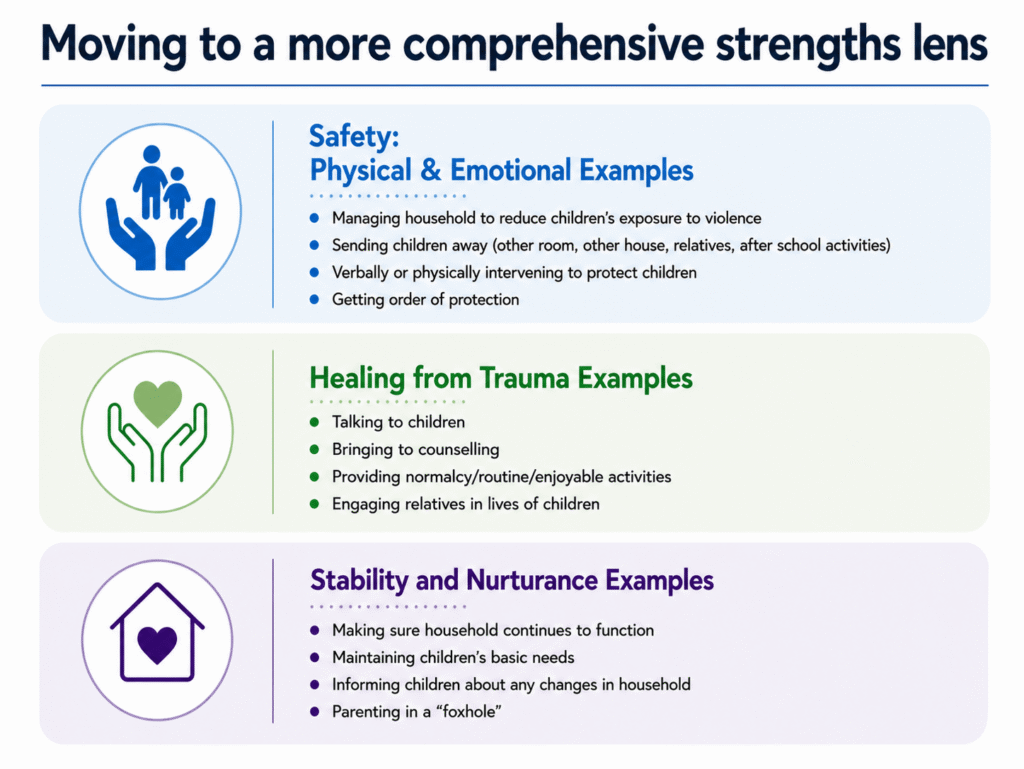
Through the S&T lens, supporting Aishah was key to strengthening her children’s safety and well-being. 

Counselling helped Aishah process the trauma and grief after violence, recognise her resilience, and advocate for herself. 

Over time, Aishah grew calmer and more grounded. As she healed, Aishah became more present for her children – playing with them, guiding them in their schoolwork, and taking time to help them understand the family changes. In doing so, she provided reassurance and a sense of stability during a difficult transition.

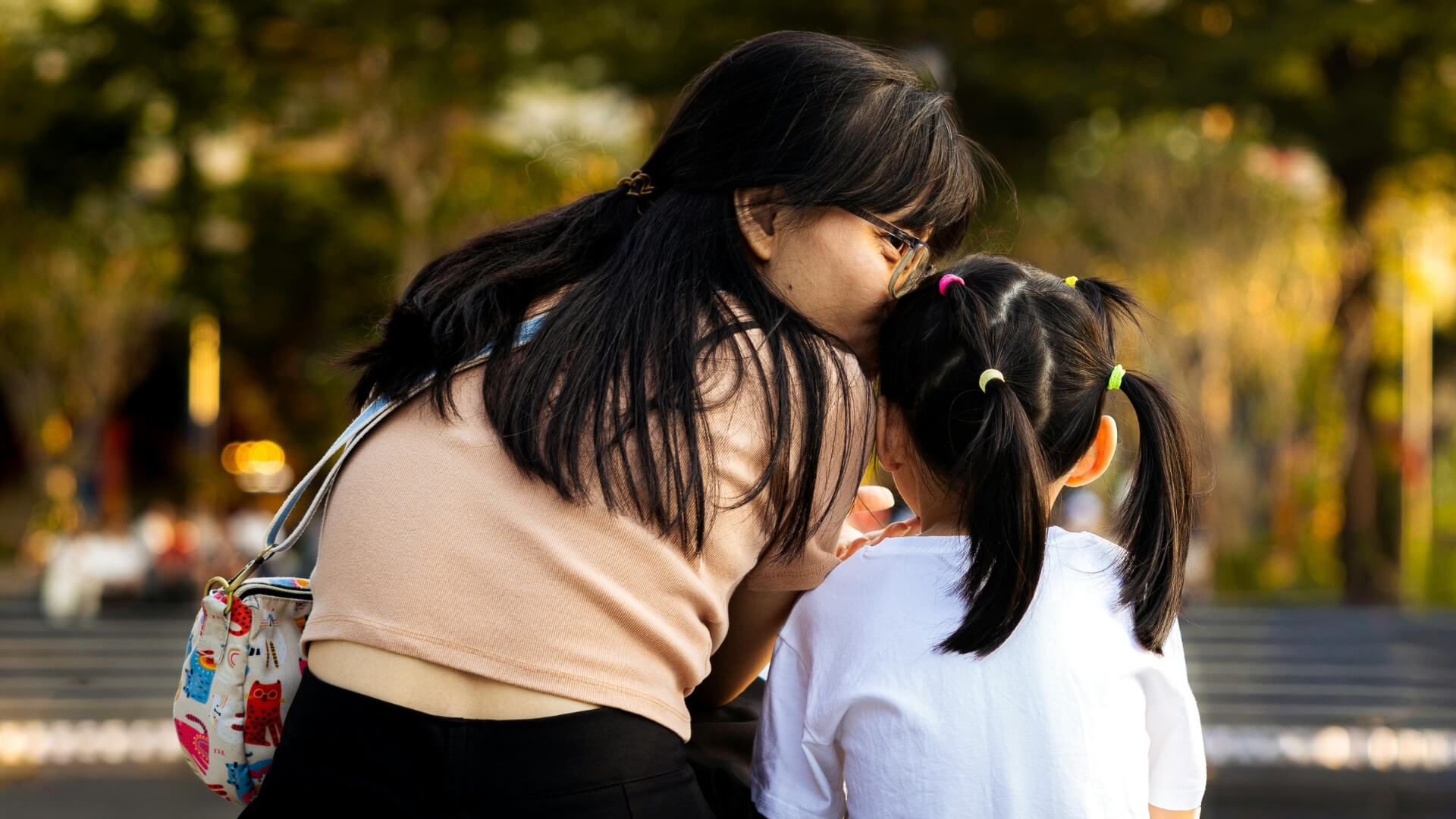
Aishah’s healing has allowed her to be more present for her children.

With safety plans in place and Aishah learning to set firmer boundaries with her ex-husband, incidents of physical violence decreased, and the children’s exposure to psychological harm was reduced.

Practical help proved just as vital. The FSC helped reduce the children’s exposure to violence and conflicts by enrolling them in subsidised after-school care, while supporting the family’s basic needs during a period of financial strain. During and after the divorce, Ariel also supported Aishah in pursuing maintenance to ensure the family’s needs were met.

When discipline crosses the line

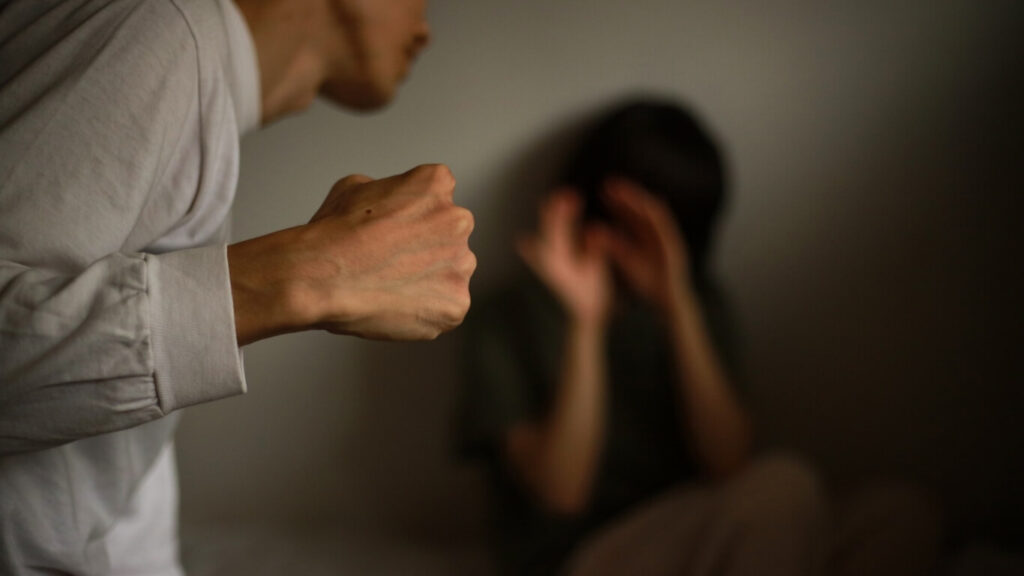
In some families, violence against children is framed as discipline. Yet, research in child psychology shows that physical punishment, including caning, can breed fear or resentment and model aggression as a way of resolving conflict. Over time, it can also erode trust and safety in the parent-child relationship.

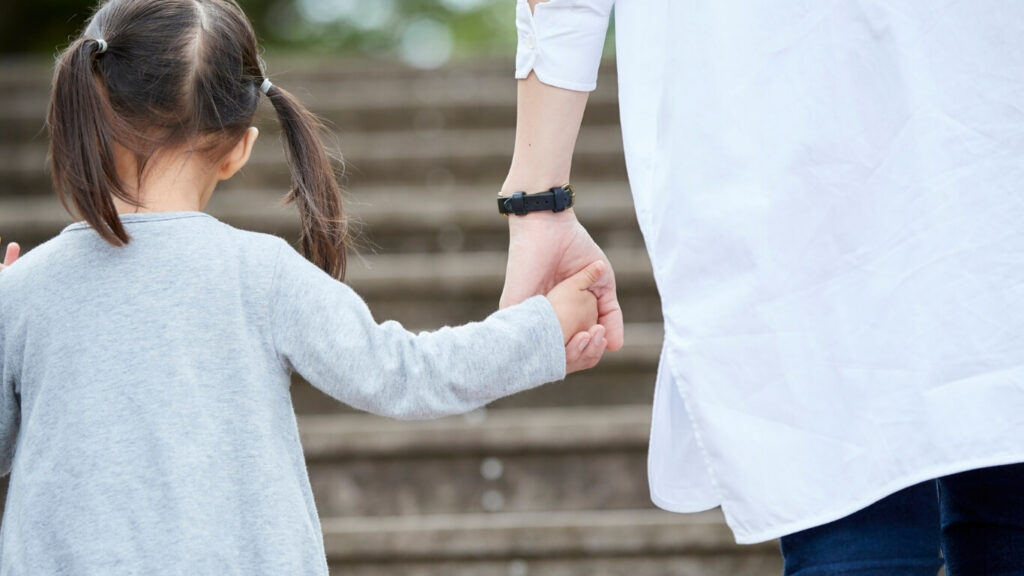
Physical punishment can leave children feeling emotionally unsafe with their parent. (Photo Credit: Canva)

Lina* witnessed this firsthand. Her husband would frequently cane their children whenever they misbehaved. “Sometimes, he would also say very hurtful things, like telling them they would grow up to be useless,” said Lina, who is in her 30s. 

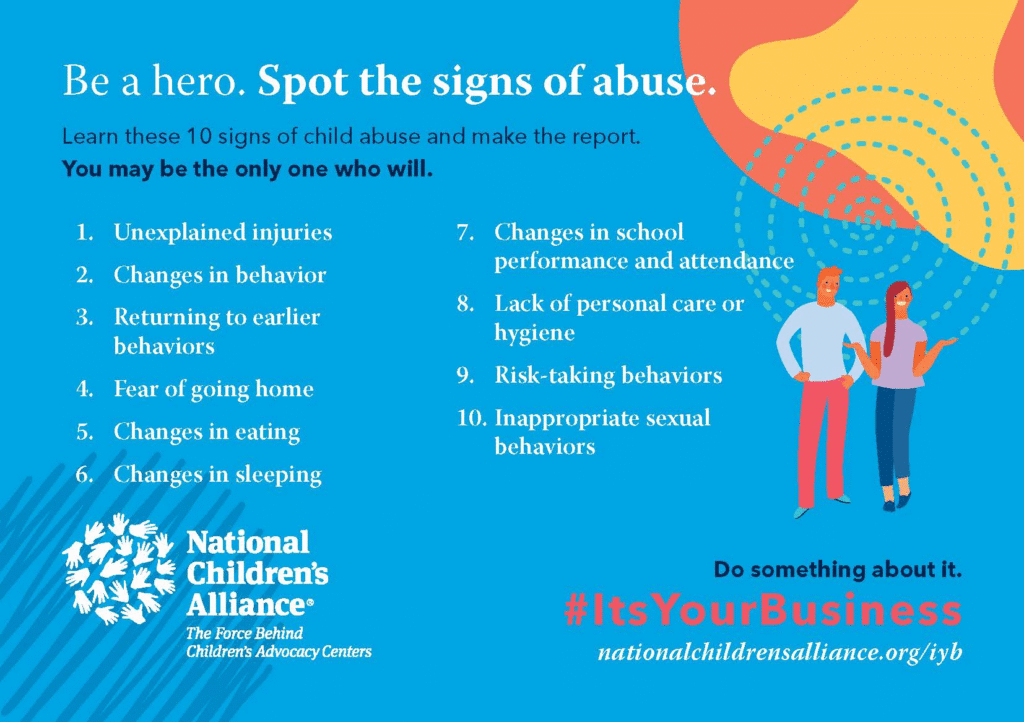
The impact on her children became evident after years of repeated punishment, from persistent bedwetting to increased aggression and social withdrawal.

Credit: National Children’s Alliance

Putting her children’s safety first

Lina was later referred to MWS TFSC, where a social worker advised her to apply for a PPO for her children. “Applying for a PPO was an important step in protecting my children,” Lina said. 

She hopes more parents will move away from caning, and instead use conversation and consistent, non-physical consequences – such as a loss of privileges – to set firm boundaries. 

While the road ahead remains uncertain amidst their acrimonious separation, Lina is focused on rebuilding a sense of safety and stability for her children – one small step at a time. “I want them to grow up knowing they are loved,” she said.

Helping her children be children again

For Aishah, the goal is similar: helping her children heal, and simply be children again. 

Following the finalisation of the divorce, the co-parenting relationship with her ex-husband has improved. As a result, their children have begun to heal from the trauma. “They are more relaxed during sessions – playing, joking, and sharing their hopes and dreams,” Ariel observed. 

With tensions reduced, the children are able to spend more time with their father and receive support from both parents.

From heartbreak to healing

After nearly five years of counselling, Aishah has also undergone a significant transformation.

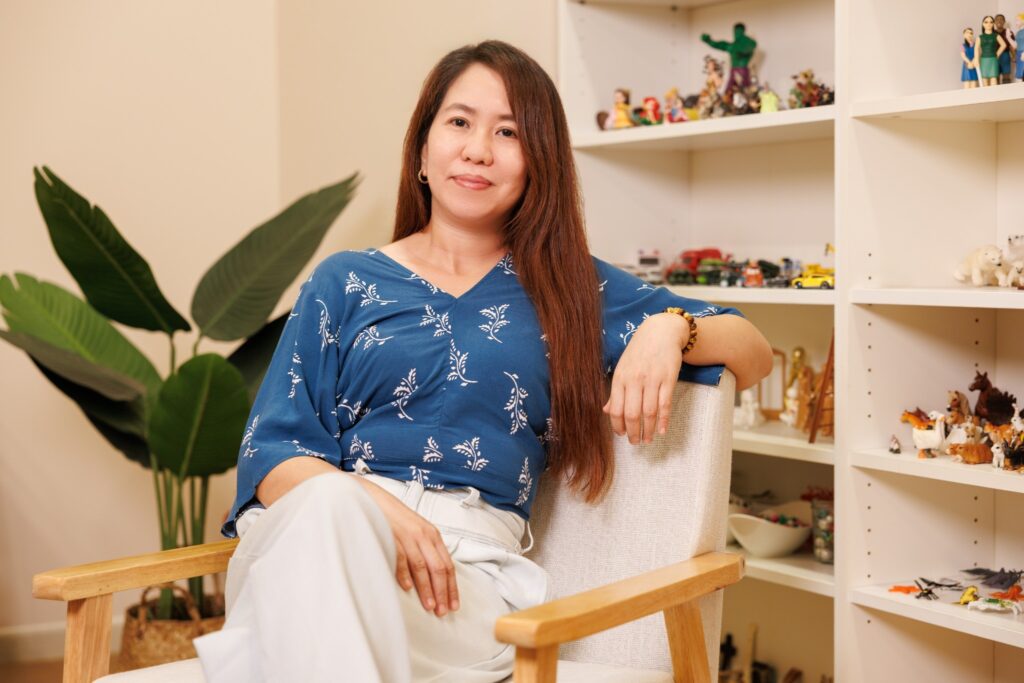
Years of domestic abuse left Aishah grappling with grief and loss. Through counselling, she found healing – and now hopes to empower other survivors.

“I used to feel powerless and overwhelmed,” she said. “But I’ve come to a place of acceptance and I’m able to look ahead, knowing that I have what it takes to face the future.” 

*Not their real names 

If you or someone you know may be experiencing family violence or abuse, call the 24-hour National Anti-Violence and Sexual Harassment Helpline on 1800-777-0000.

More stories like this

“There’s a lot of fire-fighting.”
UV Staff Story | 1 Jun 2026

“There’s a lot of fire-fighting.”

Read more
View details
Helping Children Feel Safe
UV Beneficiary Story | 1 Jun 2026

Helping Children Feel Safe

Read more
View details
Shining Brighter Together as One Community
Video | 31 Mar 2026

Shining Brighter Together as One Community

Read more
View details
In the push for achievement, are Singapore children learning resilience?
Contributed Article | 15 Mar 2026

In the push for achievement, are Singapore children learning resilience?

Read more
View details
Before We Ask That Question This Lunar New Year…
Contributed Article | 12 Feb 2026

Before We Ask That Question This Lunar New Year…

Read more
View details
Get involved

Make a difference

Today we support over 22,000 families and individuals, who face struggles in different ways, across age groups, ethnicities and religions.

image